The Women’s Federation and SHG movement have transformed women’s lives, but a saturation approach is needed to ensure every woman participates in income generation and achieves independence.
Non-communicable diseases and low awareness of menstrual hygiene continue to affect communities, while youth require greater access to skill training and employment opportunities to secure sustainable livelihoods.
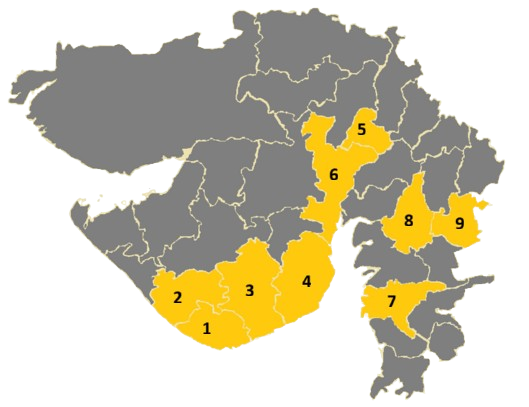
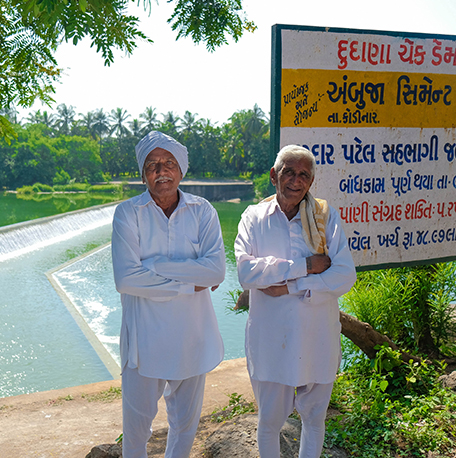
Micro irrigation is a major thrust area with 6162 ha converted and 500 ha added each year – saving water and enhancing yields. Communities are being empowered to conduct Water Quality Testing, and 78 coastal villages have received tap connectivity under the drinking water scheme. Importantly, groundwater is also being monitored and managed.
Additional water storage capacity
Reduction in TDS levels
Pushback of Salinity
Under Micro Irrigation
Due to Drip Irrigation
With 100% Tap Connectivity
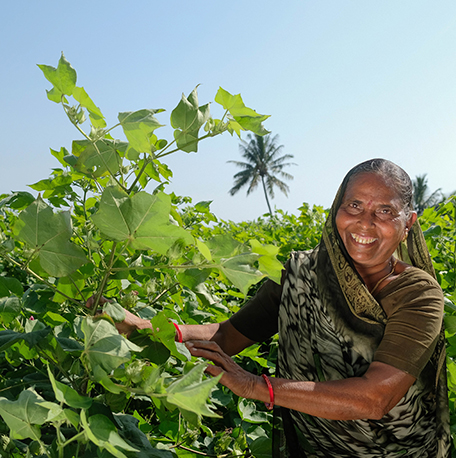
Better Cotton remains the primary focus, engaging over 67,000 farmers. To strengthen income streams, Ambuja Foundation promotes allied agriculture such as animal husbandry, improving cattle health and milk production. Horticulture and vegetable cultivation are also key areas of intervention. Ambuja Foundation builds farmers’ capacity through Farmer Producer Organisations (FPOs), training them in climate resilience and natural farming, and supporting value-added products such as mango pulp and ginger powder.
Under Better Cotton System
Orchards
value adding produce
Using bio products
Use safety equipment
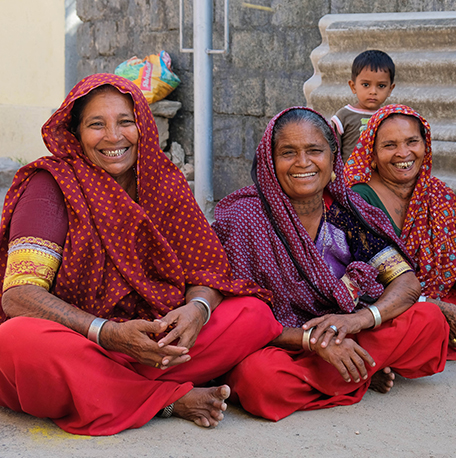
Ambuja Foundation promotes the socio-economic empowerment of women by forming Self-Help Groups – training women on micro-credit, bank linkages, credit rotation plans and income generation. In Kodinar, the groups are so independent that they have started their own Credit Cooperative Society. Women have also established the Sorath Mahila Vikas Sahkari Mandali to take up socio-economic development activities in the region.
SELF-HELP Groups
Women Engaged
Women’s Federation
involved in income generation
Ambuja Foundation promotes preventive and promotive healthcare with a strong focus on women and children. The programme is implemented by trained village-based health workers, known as Sakhis, who collaborate with the government to improve access to quality healthcare at the village level. Community Clinics have been established to ensure timely medical support, while Anganwadi centres are strengthened to improve child nutrition.
The Foundation also addresses the growing challenge of non-communicable diseases through regular screening, awareness campaigns, and lifestyle interventions. A Healthcare Centre for Truckers in Surat extends essential services to this often-overlooked population. Recently, initiatives on plastic, solid and liquid waste management have been introduced under the Lighthouse Project to further improve community health and sanitation.
Anganwadi Centres Supported
Sakhis
treated in camps
beneficiaries reached through NCD program
community clinics
truckers reached through the HCC
under light house project
Health camps
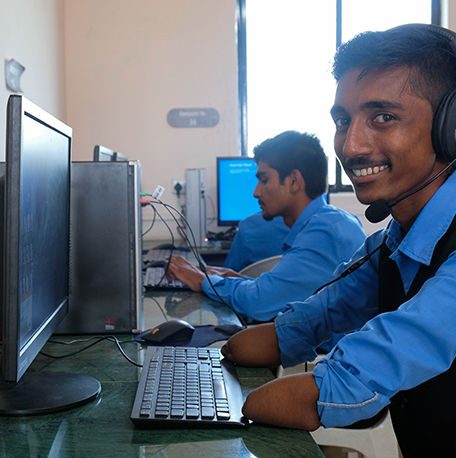
With seven SEDIs across Gujarat, local youth are trained in trades such as welding, electrical work, CNC cutting, nursing, BPO, and electronics. The SEDIs are affiliated with the NSDC and feature state-of-the-art workshops and laboratories. A CNC machine has been installed to meet the needs of the local manufacturing industry. Additionally, SEDIs are leading the way in training girls in traditionally male-dominated fields such as electronics.
Youth trained
Placed in jobs
Placement Rate
female trained
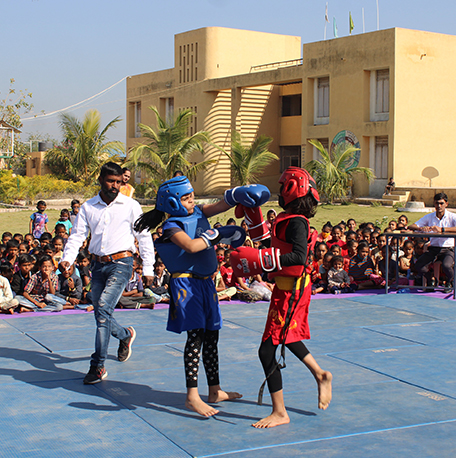
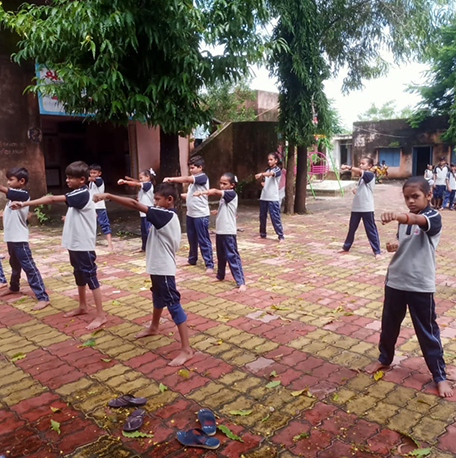
Ambuja Foundation’s education programme focuses on promoting physical education, WASH, and reading in schools. To enhance the quality of physical education, teachers receive training and access to improved resources. The Foundation also supports reading by establishing school libraries and encouraging regular reading habits among students. Ensuring adequate WASH facilities has been a priority to promote better sanitation and hygiene in schools.
School Libraries
Schools in Physical Education
Schools with WASH Facilities
Mini Science Lab
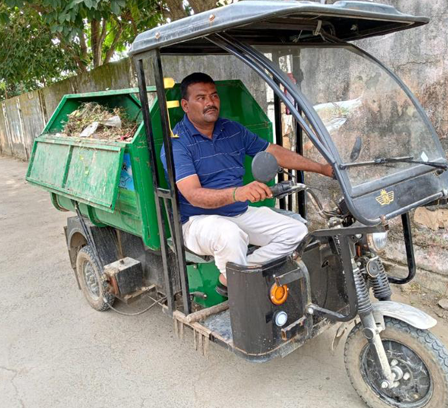
As part of the Lighthouse Initiative, along with the Vadnagar Gram Panchayat, the local community was mobilized to take charge of plastic waste management by forming Self-Help Groups (SHGs) of waste collectors. The SHG has been integral in collecting and segregating plastic waste, which is then repurposed to Ambuja Cements as alternative fuel contributing to a cleaner and healthier environment. The initiative has not only reduced the plastic burden on the environment but also created a source of livelihood for community members. By incentivising the collection of plastic waste, it has empowered the community in ensuring waste management remains sustainable and community owned.
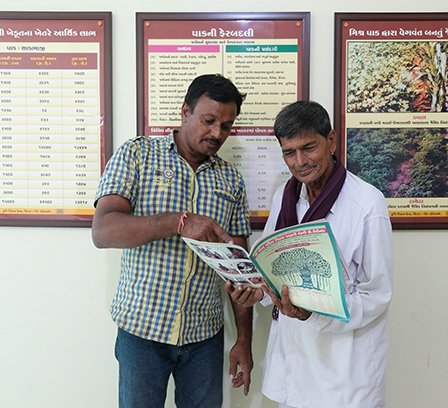
In 2007, the India Council for Agriculture Research (ICAR) sanctioned establishment of a KVK by Ambuja Foundaiton for Junagdh District. KVK builds the capacity of farming communities through training, demonstrations and on farm research, to reduce the time lag in the transfer of technology to farmers. Complete with a Community Radio Station for farmers, Soil & Water Testing Laboratory, Natural Farming, Model Nursery, Crop Cafeteria and Unit of Medicinal Plants. 53 training programs, 5 farmer melas, 28 lectures, 59 awareness programs have been organized. .
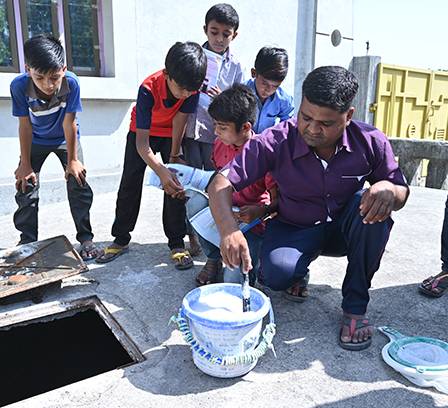
With Community Health Clinics noticing a spike in viral fevers during monsoons, Ambuja Foundation discovered high levels of bacteria in local water sources. Taking a 3-phase approach Ambuja Foundation set about educating communities about the importance of regular water quality testing - teaching them how to conduct a simple water test; and showing them the steps necessary to address the problem - using chlorine powder to treat water, cleaning storage tanks and electing a local Water Operator to manage the water and its distribution. Today 13 villages are empowered to conduct tests and manage their water quality.
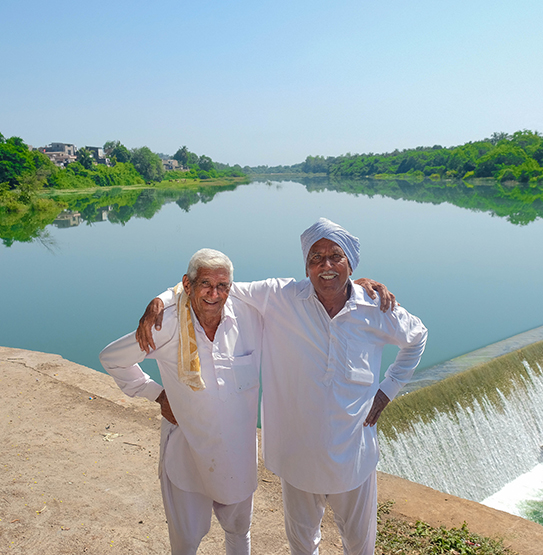
In 1986, the government installed 30 tidal regulators in the coastal belt of Gujarat – 6 of them in Kodinar. However, the tidal regulator in Muldwaraka went totally defunct in a short period of time. After many attempts by the community to fix the problem, Ambuja Foundation was allotted the task of reviving it and putting their heads together, decided to build a temporary earthen bund downstream, to prevent the barrage of water from the sea. Despite multiple collapses of the bund, the team persevered and in 2009 the project was completed in just 5 months.
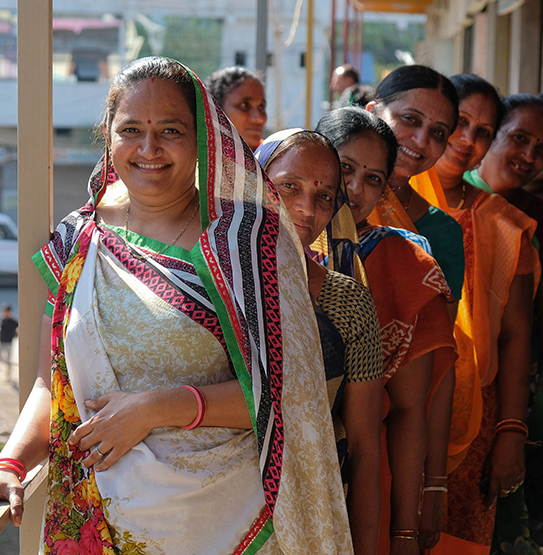
Once upon a time, the women in Kodinar, Gujarat, were so suppressed that they barely left their homes. Today they are a force to be reckoned with - uniting to form the Sorath Mahila Vikas Sahkari Mandali Women’s Federation, and kickstarting their own Cooperative Credit Society Bank. Today these women are tackling social issues such as ill-treatment of widows, sanitation and domestic violence, whilst also driving income generation for their households – transforming the status of women in just 10 years.
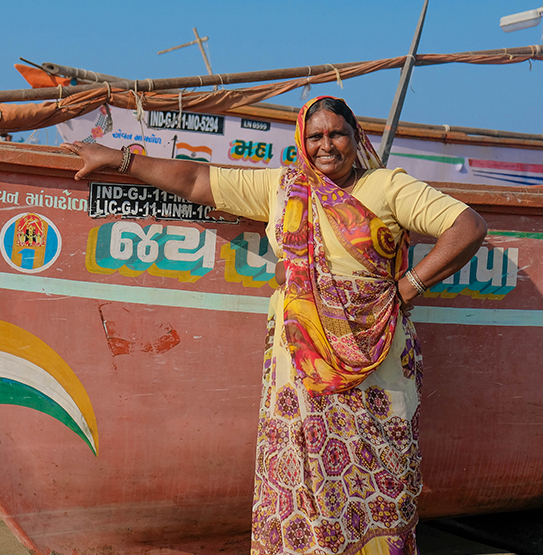
‘Venuben’ is the most successful woman entrepreneur in Ambuja Foundation’s history! A simple housewife from Gujarat who dreamt of owning her own boat and business, and calling the shots in her life, Venuben took a massive risk, borrowed heavily and invested in a fishing boat - putting her heart and soul into her fishing enterprise. Bucking the odds, she was rewarded when, in just one bountiful fishing trip, she hauled in the extremely valuable ‘ghol fish,’ earning Rs. 70 lakhs in one hit and paying off all her debts. The future of her family was changed forever, thanks to the courage and passion of this incredible woman, supported and guided by Ambuja Foundation.
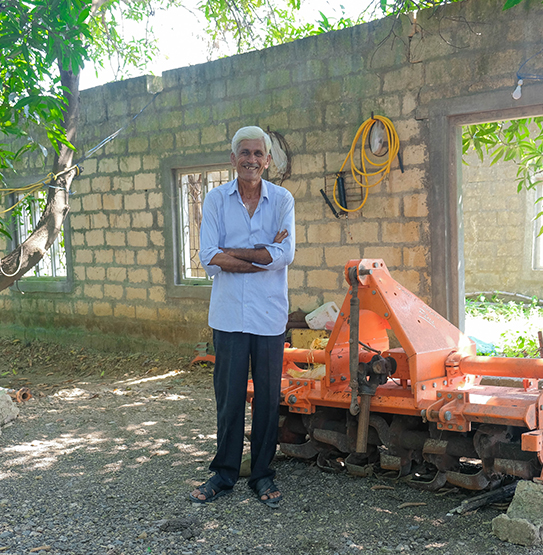
20 years ago, farmers in Pipli grew just one crop of groundnut a year – the crop was always poor because the ground water they used was saline. The harvest was never enough to survive on, so men used to migrate to find work. But Ambuja Foundation helped turn things around. Back then the entire village lived in mud huts, but today they live in concrete houses. Once water came farmers grew 3 crops a year – cotton, sugarcane, wheat - and even got into animal husbandry. Pipli village is today considered 100% educated – all the kids go to school, and the older ones have government jobs or have been to college. All because of water.